
Keep up to date with the most important stories and the best deals, as picked by the team.
You are now subscribed
Your newsletter sign-up was successful
Want to add more newsletters?
Join the club
Get full access to premium articles, exclusive features and a growing list of member rewards.
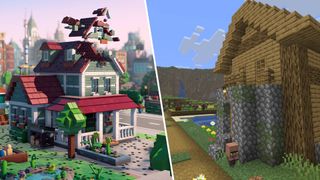
*Left: Lego Skylines, Right: Minecraft
(Image credit: Mojang, Lego)*
- Copy link
- X
When Lego announced the upcoming release of Lego Skylines last month, the collective reaction from the gaming community was a resounding, "Oh yeah, duh." There is an inherent logic to a digital landscape where colorful plastic bricks snap together to form sprawling metropolises. Viewed from the high-altitude, godlike perspective we have long used to survey our physical tabletop creations, it feels like the natural evolution of the brand.
But hold on a second. If we are talking about digital brick-laying, what about the franchise that has spent over a decade affectionately (and legally) referred to as "digital Legos"? Minecraft should, by all rights, have been the first to pioneer a dedicated city-building spinoff. How did Mojang, backed by the immense resources of Microsoft, allow Lego to beat them to the punch in such a lucrative category of PC gaming?
Minecraft as a city builder: The Unfulfilled Potential

Why the logic holds up
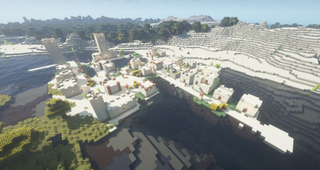
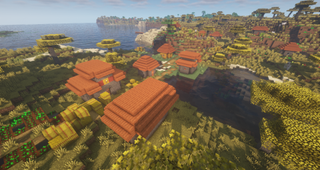
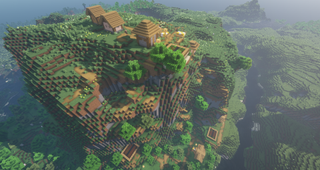
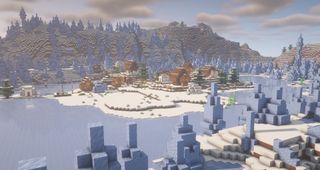
The argument for a Minecraft city builder isn’t just fan speculation; it is built into the game’s very DNA:- The Template Foundation: We already have structured generation in the form of villages, desert temples, and oceanic fortresses. The game already knows how to snap distinct buildings together; scaling this into a "Sim-Steve" city builder is a logical technical step.
- The Villager Economy: We have spent years turning villagers into glorified labor units, shuffling them into trading halls and forcing them into professions. The AI infrastructure to manage a populace is already present.

The "Why Not?" Factor
If it seems so obvious, why haven't we seen it? Several factors likely contribute to this: The Prototyping Trap: It is entirely possible that Mojang has internally prototyped a city builder, only to find that Minecraft’s* voxel-based pathfinding or entity management becomes a nightmare when scaled up to a city-wide level. The Partner Studio Search: Major spinoffs often require specialized talent. While Mojang manages the core game, finding the right studio—one capable of balancing the charm of Minecraft* with the intricate math of a city simulation—is a massive undertaking. The Mixed Spinoff Track Record: Minecraft Dungeons was a polished, successful venture that resonated with the community. Conversely, Minecraft Legends* struggled to find its identity in the competitive strategy space. Mojang is likely being exceptionally cautious about expanding the brand into genres that require intense mechanical depth.I am totally in favor of the concept. Minecraft villages are atmospheric and charming, but as any veteran player knows, placing blocks one by one is an arduous process. I want to build at the scale of a mayor, not a laborer.
Keep up to date with the most important stories and the best deals, as picked by the team.
📢 This article was officially published via Davanix Engine for loyal readers of Davanix Web.


